


I hinted at this while reviewing Secret Of The Loch for last year’s “oldie” Dino Dicember entry, so we might as well go back even further in time.
Okay, maybe somewhere AFTER the zoatrope was the new fangled talk of the town.
I honestly can’t think of anything more ancient (in many ways) for dinosaur audio-visual media than Gertie The Dinosaur by Winsor Mc Cay, one of the earlier cartoonists and animators.
Contrary to popular belief, this is not the first animated film ever made, as McCay himself made an animated version of Little Nemo In Slumberland back in 1911, and in 1912 he also made another film, How A Mosquito Operates.
And if we want we CAN go back further into the proto-history of animation itself, with Reynaud’s Pauvre Pierrot from 1892, or Blackton’s Humourous Phases Of Funny Faces from 1906, this being the more accurate if we consider “proper” animation as in early hand drawn animation, and we discount stuff like Katsudo Shashin from 1907, which didn’t use photographies but had the drawings impressed via stencil on the film itself, via an instrument also used for magic lantern slides, so one could argue that had more in common with the ye old kamishibai shows (basically a magic lantern live action street theather done for kids).
But this is the first animated film to feature a dinosaur, ever, and we’ve come to pay our respect to “Granny Gertie” herself.
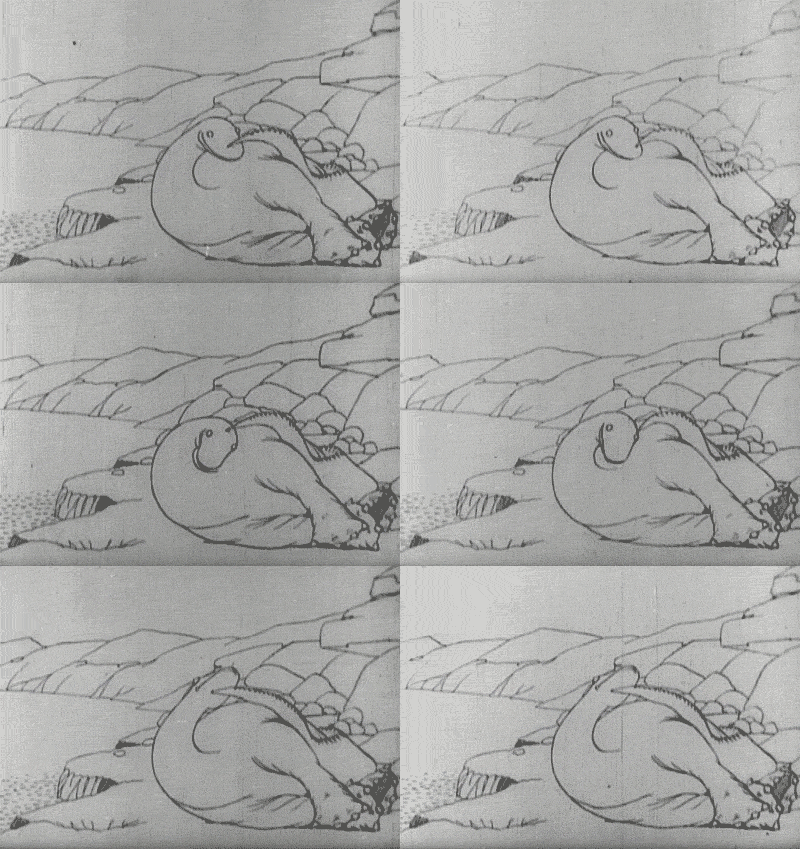
As for why this is what Winsor McCay is mostly remembered for, despite having done previous animated films, is that Gertie’s character had personality, and so it felt more cinematic, as in, different from the previous films that still shared DNA with the “parlor trick/magic show” early nature of cinema (animated or not), and while the film didn’t invent most animation techniques, but was the first to use many of them together, like tracing paper, keyframes, animation loops.
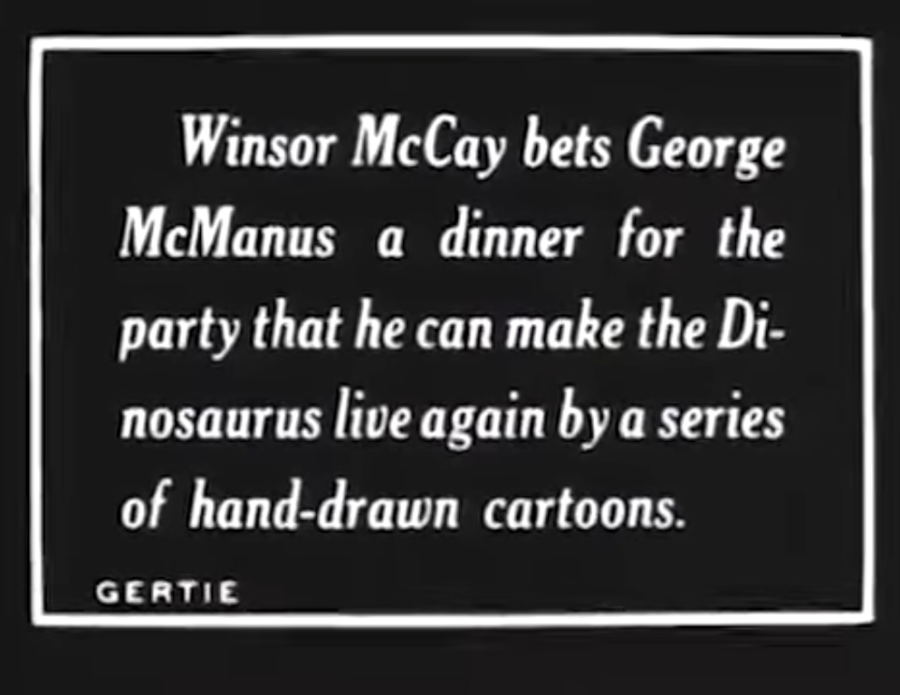
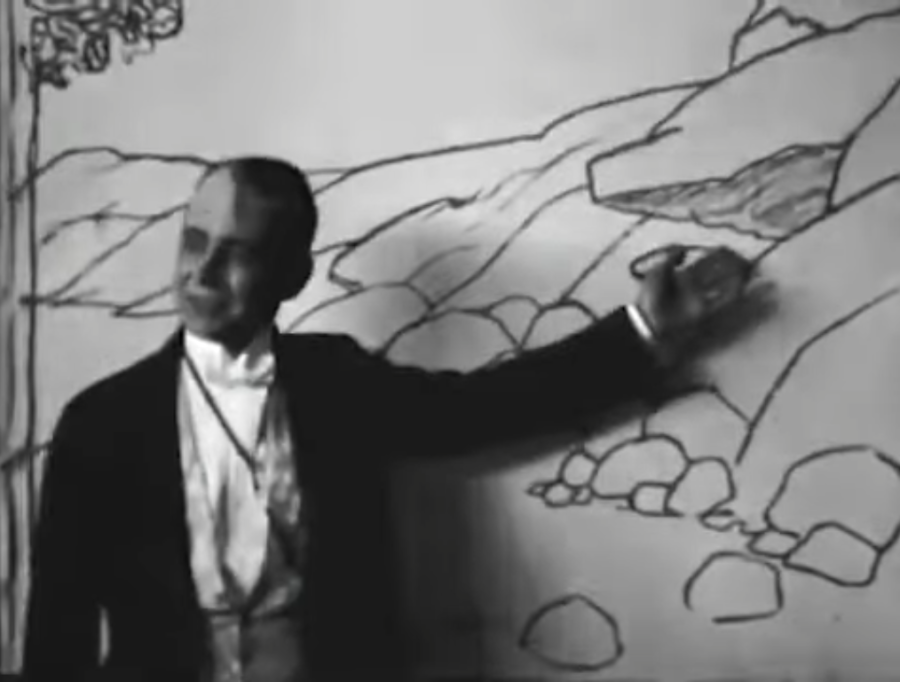
It was also originally shown as part of McCay vaudeville act, with the childlike dinosaur, Gertie, made to look like it was responding to its master every command in real time, but for its theathrical release they added a live-action introductory sequence, as in, McCay and other cartoonists are having a jolly joy ride, they get a flat tire, so while they wait they go into the National History Museum, and while looking at a dinosaur skeleton, McCay bets on him being able to make the dinosaur live again through a series of hand drawn cartoons, which he does deliver six months later.
This meaning the film is now 7 minute longer, as this opening sequences bumps up the runtime to 14 minutes, meaning half of the thing is what we now would call “padding”.
What do you expect, it was literally the 1910… and by that i mean that back then you DID expect films to be about 10 minutes long; sure, stuff like Melies’ A Trip To The Moon was originally 18 minutes long, but until 1997 nobody really saw the entire thing, as the more common print of the film going around was an incomplete one.
Getting back to Gertie, yep, it is a fact that the theathrical release seen now feels like half of it it’s padding to reach certain film (remember, actual film) meters quota, and it’s also undeniable how obvious some of the animation “tricks” are nowadays to anyone, but damn if Gertie is indeed a charming goofball dinosaur, and the animation itself it’s fairly smooth, despite the obvious loops, it’s fun to see how even early on they had to get creative in how they reused assets.
Plus the meta nature with the animation intended to be directly interacting-reacting to the animator for slapstick comedy bits it’s interesting in itself, aside from being a product of the hybrid vaudeville act the animation was built around, and sharing the same qualities that make early cinema more akin to (then modern) magic act, wizardry.
Also, gotta love how McCay draw himself into the cartoon’s final minutes so he could show Gertie being friendly to him and give him a ride on her back before he bows and they both “exit stage”.
And remember, in the theatherical “special edition” this is a framed as McCay betting he can actually do make the dinosaur alive via animation (not so randomly as Gertie, a brontosaurus, is also based on the Apatosaurus skeleton conserved at the American National History Museum, indeed where they go after getting a tire flat in the extended theatherical version) , with a party dinner being paid by one of his fellas/friends that weren’t so sure about him being able to.
I first remember seeing a clip of Gertie (alongside Humourous Phases Of Funny Faces) with a very early Cartoon Network logo, probably was a collection of old animation films from the infancy of the “medium”, and it deserves to be remembered, since it’s still impressive for a 115 years old silent film, even if it modern audiences might not care for the introductory sequence added for cinematic releases, like really not give a shit, and would prefer to go straight to the actual film.
Which you can find online for free, as the film has been very very much in the public domain for decades, and you can obviously find it on Youtube, so if you have any interest in the history of animation… most likely you would have seen it already in film class, but it is readily and freely available, and being about as long as some Youtube webseries means there’s no excuse not to.
As obvious and pedantic and stolen and stock this might sound, it is true this influenced a whole generation of american animators, obviously other people could have come up with the notion that animated characters need personality, but it’s undeniable a fondational piece of animation history, as it was popular enough to get Buster Keaton to reference it, someone tried to have his bootleg, lower quality version of Gertie on the market as well, and was the cartoon taken as example from later craftsmen in this trade, like Fleischer or Walt Disney, alongside some now less remembered, like Pat Sulivan (which created the earlier Felix The Cat cartoons) or Walter Lanzs, aka the father of another now eclipsed (even now most don’t even know they made a live action film back in 2017… and another one in 2024) cartoon legend, Woody Woodpecker.
Again, while obviously Gertie The Dinosaur’s own historical significance is bound to overshadow the film itself, i can’t deny it still is, more than 100+ years later, still funny and charming (even if more of a novelty, which also fits), Gertie is cute, which isn’t a given, but i guess dinosaur do never get old.

