

I’d say we digged a bit deeper than usual this time around, unless you daily dine your eyes on hyper-obscure 70s Yugoslavian vampire films….which you don’t.
Then again most likely you couldn’t, because outside of the Balkans, this movie had been literally uknown for years, and would have still been if it wasn’t for the internet, because if it wasn’t for some people finding, subtitling and sharing it around since 2012, i won’t be even here able to be talking about such an obscure piece of media never meant to leave its country of origin.
Always something peculiar when the movie was made under a nation that doesn’t exist anymore, and when i can claim to actually review a “serbian film”.
Loosely based on a 1880 story called “After Ninety Years” by Milovan Glisic, Leptirica‘s story revolves around the 19th century Serbian village of “Zaroshje” that is plagued by the vampire “Sava Savanovic” who has been systematically killing anyone who takes charge of the flour mill (situated in the woods outside the village). After four millers have been killed the council elders become desperate as food is rapidly running out and the community can’t really survive without the mill.
Meanwhile on the other side of the village a poor young man, Strahinja, is in love with Radojka, the daughter of the local landowner Zivan. After asking Zivan for his daughters hand in marriage and been refused on the grounds of his poverty, Strahinja decides to leave the village, but on the way he is met by members of the village council, who persuade him to take the job of the village miller.
Fully expecting him to be dead by the morning, the council is astonished to find him still alive and decide to locate and destroy the grave of the vampire Sava Savanovic, in order to rid themselves of that evil once and for all…
Directed by Croatian born Djordje Kadijevic , Leptirica (which translates to “The She Butterfly” or “The Night Butterfly”) was produced for the Belgrade television company “Radiotelevizija Beograd”, and was indeed a rarity in its homeland, allegedly the first Serbian/Yugoslavian horror film ever made (1967’s Viy was Russian, FIY), and undeniably it must have made an impact because it allegedly caused a Macedonian man to die of fright…. which might have sound like some good exploitation style marketing, if this didn’t happen in Yugoslavia.
But it did, and as a result the director got even branded as a “terrorist” by some government officials, thanks to what had been called “the scariest vampire movie ever made”.
It’s worth remembering the context, because this – while coming out the same year as Hammer’s The Satanic Rites Of Dracula, wasn’t made by or for an audience that could just go the cinemas and get spoiled with hundreds upon hundreds of horror films displaying gore and nudity willynilly, because people living in the USSR, the “Eastern Block”, simply didn’t have this luxury.
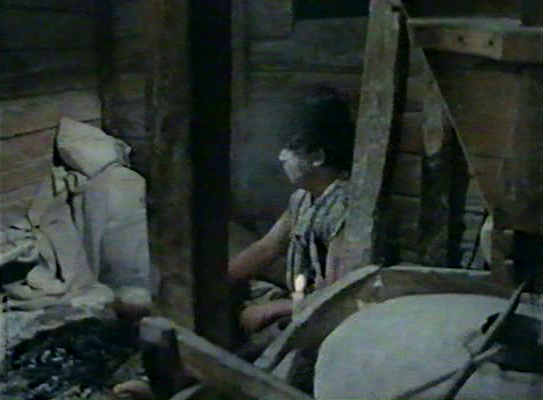
Leptirica is a Yugoslavian TV production done with an obviously locally sourced cast and it does indeed look “rustic”, because it literally is, the effects are DIY, and to be honest sometimes you’re not even sure if the grotesque scenes or comedic bits of levity are completely intended as such, as with the bizarre every day experiences of this village and their posse of grotty farmers that get drunk and after staking the coffin of the vampire, decide to throw stones at it as a tease.
It’s kinda refreshing from a foreigner to see a vampire movie detached from the gothic trappings, and instead basing itself on its own national folklore (specifically the legend of Sava Savanovic, a vampire that was said to haunt an old watermill in the village of Zarozje, Serbia), from the side of the world where the vampire myth originated, even if its done on the cheap, with the monster design here depicting basically a vampire-werewolf hybrid, meaning they gave the actress some fake vampire teeth and glued some animal hair on her face and body, which is a weird contrast to the Serbian vampire lore that says the vampire can shapeshift into a butterfly as a way to have its soul escape, avoid its final death via being staked or killed via other means.
And the vampire are rabid red eyed iron teethed feral monsters that suck on blood, not the lusty, classy deceivers more common in gothic literature (nor quite the strigoi of Romanian foklore) because here the protagonist is nature, it’s a folkloristic dimension where there’s nothing but small communities of farmers and villagers subsiding on mills and herding livestock, with the annexed pastoral melodrama, as the girl’s father won’t approve of her marrying Staniha because he’s poor.
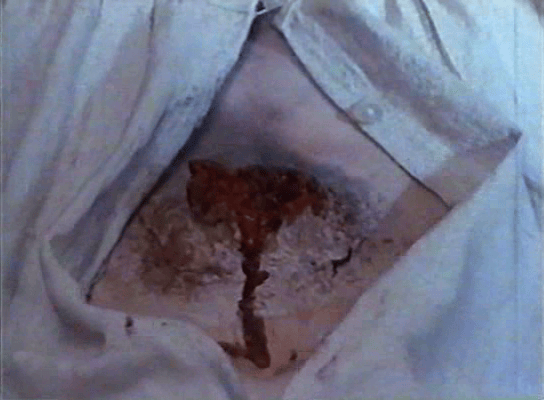
Yet, the suggestive folk atmosphere (enhanced by the musical pastoral serbian chants and general soundscape) works, the few occasions where the vampire attack are fairly effective, the very few instances of gore too, and it’s just 61 minutes long, so it’s worth watching and remembering, even if its historical and cultural importance (and fascination from a western prospective) does tRump the quality of the film itself, though i will say it’s not boring or bad, despite the , the… acting, it is still peculiar, definitely i can see why it must have been unforgettable for many Serbian viewers.
Unsurprisingly, the movie was never officially shown outside of Yugoslavia (it did air on national TV twice, allegedly), nor it was ever released on DVD or some “commie format”, but can be seen with English subtitles on the Internet Archive.

