

HISTORY
In a way, it’s no surprise that Croc got a sequel, as in the manual of the first game it had a “Croc II” logo and a Christmas 1998 release…. which it didn’t meet, instead releasing in summer of 1999, but make no mistake that Fox Interactive was indeed banking a lot on Croc, as just the PS1 version of Legend Of The Gobbos sold 3 milions, and was Argonaut’s most profitable title.
They were banking on it so such that in America the game was part of a cross-promotion with Nabisco, a candy company, and its Life Savers line, which in the US version replaced jelly bounce pad items, alongside 6,5 millions of wrappers with the Croc 2 logo, and Fox Interactive indeed spent a lot in advertising the game, as it included regular print ads, the aforementioned in-game product placement, and even a sweepstakes that had prizes like Playstation consoles but mostly a family trip to Australia…. dunno why Australia, of all places.
Can’t say i’ve ever seen those candies ever in my life here, and i assume they weren’t sold in Europe as a whole either because they don’t appear in the PS1 PAL version, nor i recall them having a similar marketing campaign here, just the regular magazine ads and some TV spots, maybe
Again, for clarification, i’m using my own PS1 copy of the game i bought more than a decade ago to base the review on, but while we now know the remaster is releasing the 29th of October, as in today, at the time of writing they didn’t gave out any real date (just late 2026), so i’ll just do an EXTEND review for the remastered… eventually.
PLOT & GRAPHICS
Two years after the event of the first game, an Inventor Gobbo is done finishing up his plane project, and while taking a stroll, notices a group of Dantinis basically doing a satanic ritual that successfully brings back the previously defeated Baron Dante, who had been slumming trapped in the N’th Dimension (usually a Zool thing, but whatevs), and now is back for revenge, but first off he kidnaps the Inventor Gobbo.
At the same time, while playing on the beach, Croc finds a message in a bottle sent by his parents, so with the blessing of the Gobbo King, he sets out on an adventure to search for his biological family, while helping out various villages of Gobbos which had been attacked or troubled by the servants of Baron Dante, the aforementioned Dantini.
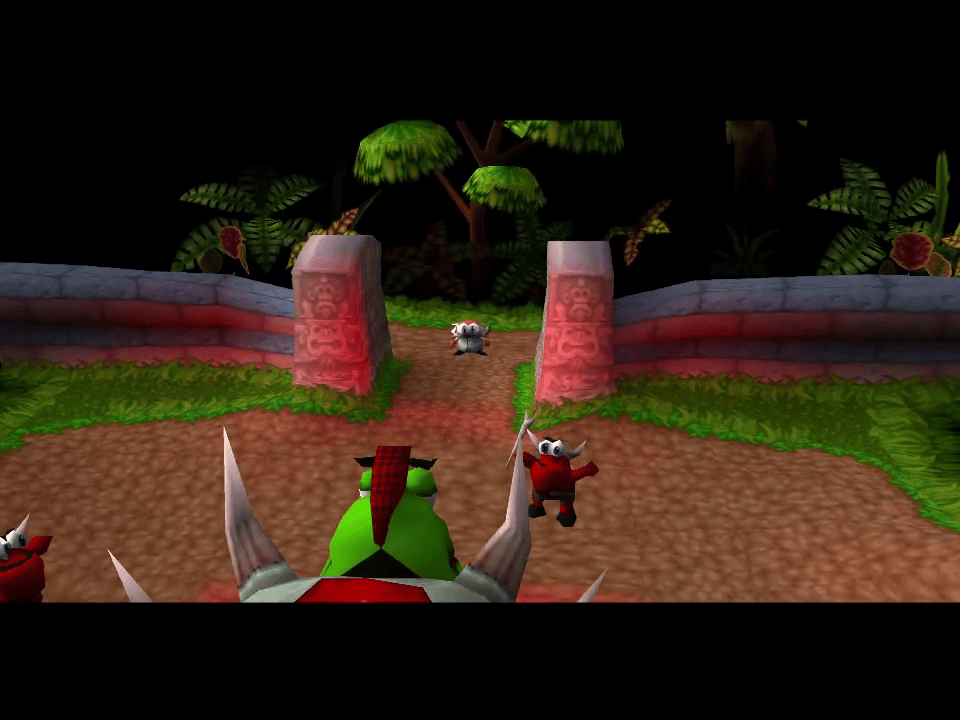
Arguably it’s a bit worse because putting the smackdown on Baron Dante once again and saving Inventor Gobbo is basically forgotten until the last Gobbo village, you mostly deal with the problems of each village, still caused by Dante and his Dantini, defeat the bosses Baron Dante throw your way, until you meet him and banish him back to the N’th Dimension.
At least in the first one you actively worked towards resolving the plot’s main issue, here instead the main/only plot thread is kinda forgotten almost immediatly after being introduced and becomes a thing again only in the final village, the whole “Croc finding his kin” thing is conveniently resolved post-final boss battle by a map that the Inventor did found, so him and Croc go the island it indicates, and Croc is reunited with his family at last…. but Baron Dante might be coming back, as kinda insensitively stereotyped cat shopkeeper suggests-sequelbaits.
Not that most did care about the plot of the first one, but still, its fine, though I do think they missed the chance to have a pirate themed world or at least give a pirate theme of sorts to Baron Dante, since he now rocks a eyepatch, i guess they weren’t feeling like doing bootleg K. Rool.
This time around presentation is a bit better, the story is framed better, we got more cutscenes detailing the plot happening, and while there’s no voice acting, they did implement a Rareware style of gibberish talk, which curiously the first game didn’t really had, as Croc did shout out some weird shouts, but nothing intelligible…. and to be honest the gibberish talk here it’s actually more annoying than in BK because of the pitch they choose, even though there is notably less of it.
Graphics look better but not THAT much better, though there is a lot more going on in the levels even in terms of decor,….at the price of having a fairly notable myopic draw distance, which was not a thing in the first Croc, but thankfully isn’t as big as an issue as it could be.
While the levels and world of Croc 2 as a whole feels more cohesive and less basic to the point of feeling underfurnished, sometimes there are assets that still feel kinda out of place, like the snakes munching grass in a Cave level that you have to use as platforms, which are weird because they are doing so above a huge lava lake, even if they sprout of a jungle texture.
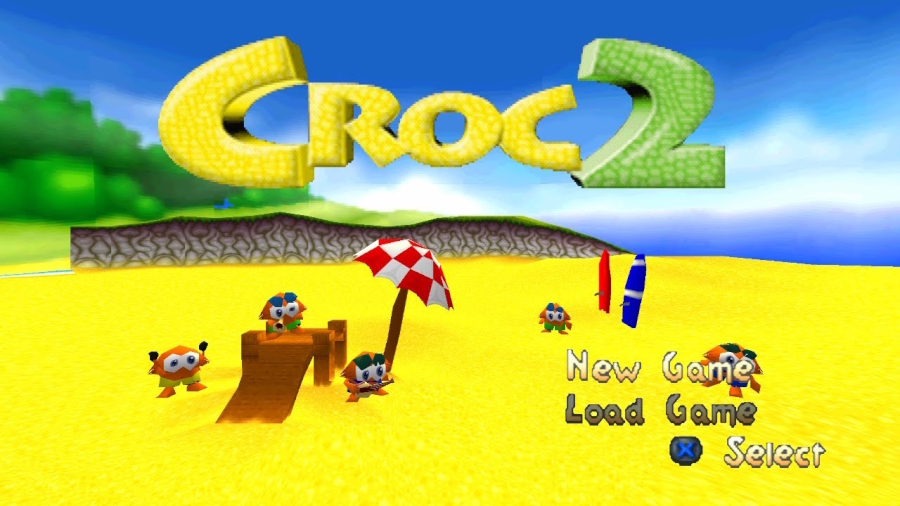
Music is quite nice as well, it has more range to represent the various village themes, with less repetitive short loops, but it also lacks a distinctive, memorable tune of his own, as it also reuse the iconic Croc theme of the original right away in the main menu.
It’s still a decent and jaunty soundtrack for this type of game, it’s more than competent.
GAMEPLAY & LEVEL DESIGN
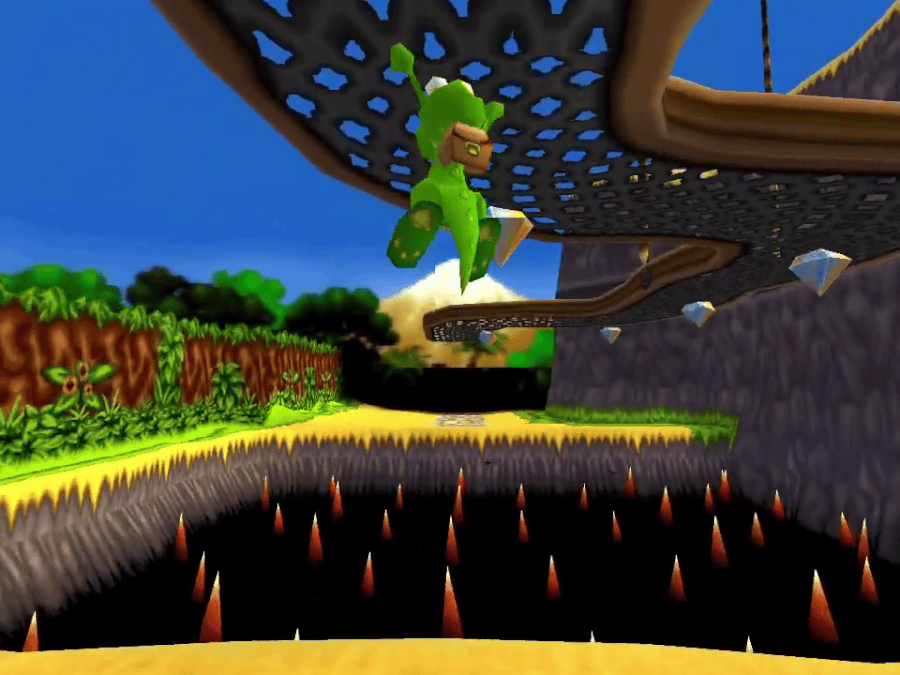
Croc 2 starts off already better than its predecessor because it has actual analog control, still a bit stiffer than you’d expect, by today standards, and admittely still a tiny bit slippery, but WAY less than the first game, and indeed it is analog control, proper one i mean.
If you want you could (dunno why you would, though) still use tank controls via the d-pad, which is why the kept the sidestepping via shoulder buttons, despite taking out the 180° flip, but for the most part controls are overall pretty good… even if you still have to overcorrect the landing and timing when launching off a swinging vine, since Croc has still a bit of that weird Crash Bandicoot-esque momentum, especially mid-air movement, but nothing major.
Speaking of that, offensive capabilities still remain kinda puny, as Croc’s main attack method is still the tail swipe, doesn’t really feel any more powerful or appears to have more range, but it will have to do, and at least the new bounce jump can kill enemies too (which also respawn as before).
In terms of traversal moves and whatnot, Croc otherwise retains all his previous skills, minus swimming because there are simply no water levels, but he can now pick up and throw objects, he also gets a spinning jump that i never found any use for, and a bouncing jump (confusingly called a “triple jump” in the manuals and wikis) you can use to reach higher by timing it right after the “ground pound” , which helps since you still don’t have a double jump… and never will because there aren’t any teacher or vendors or anything doling out new moves for Croc as he progresses.
Which feels strange because Croc 2 is designed to be more of Crash Bandicoot X Spyro this time around, opting to have hub worlds from where to access levels, and a decent number of NPC to talk to, including the store keeper that also is used to travel back and forth the unlocked hubs/Gobbo villages, and with the level design often focusing on tasks or cumulative objectives more than simply reaching the end of the level, letting you deal the levels in whatever order you wish, unlocking boss encounters to overcome and move onto the next village, rinse and repeat.
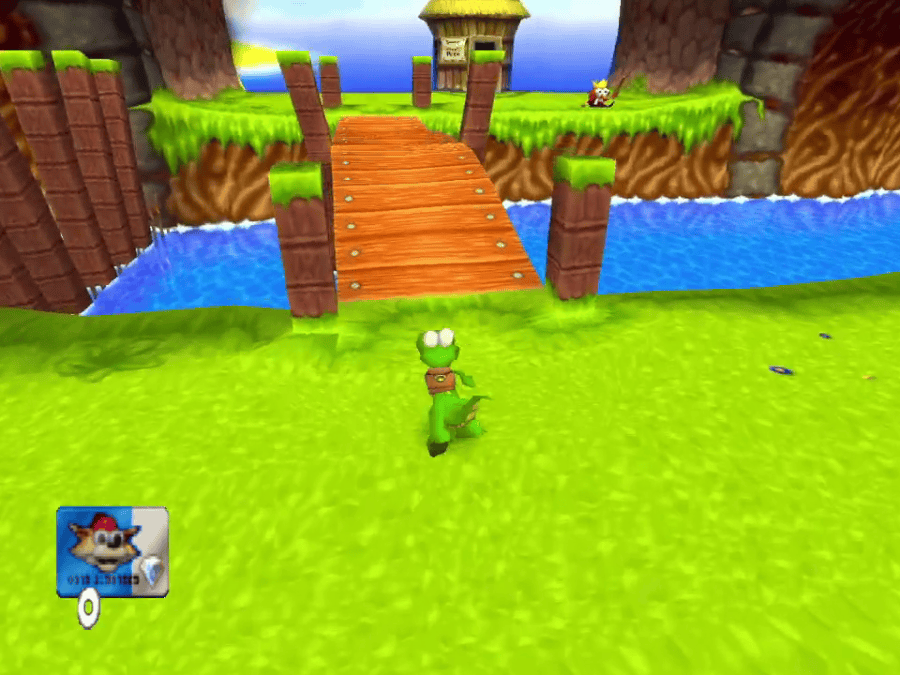
While some levels have still that Crash style approach to them, mostly played linear and require precise and fast plaftorming, Croc 2 is more open ended and most of its stages often don’t have the old “exit warp”, aside from some specific “shop gongs” that can be used to immediatly leave the stages, but these are rare, and now the regular gongs work instead as checkpoints.
Another new feature is the inventory, as now Croc starts off with an useless looking glass, but can buy from the shop consumable items like jelly platforms to plop in specifically marked spots in order to reach hidden areas, the clockwork gobbos, which also has to be activated by standing on its designated platform and used as a remote winding toy to collect some special colored gem.
The other big change is that Croc doesn’t have the Sonic style health system anymore, but instead starts off with 3 health points… and actually no lives, i guess to be modern because by 1999 the idea of still having lives systems was becoming obsolete even for this genre.
and here a lies a big issue i’ll talk in detail about in the next section of the review, because the other non small issue is the camera, which isn’t great, frankly at times you can really tell how much it struggles to keep up with whatever you’re doing, and surprisingly there’s no “reset behind the characters’ back” button, in spite how many manuals and FAQs talk about using the Circle button…. this is just plain wrong, even if it would make sense since there the “180° flip” button is gone.
But it just doesn’t, you might think it does but it’s just you assuming is in reaction to pressing a button, when it just’s the camera that eventually does realign with your movements or tries to do so (and there are no camera setting to fiddle or toggle with) and while the game does have autosaving, it wasn’t yet that common and widespread to have the right analog stick control the camera.
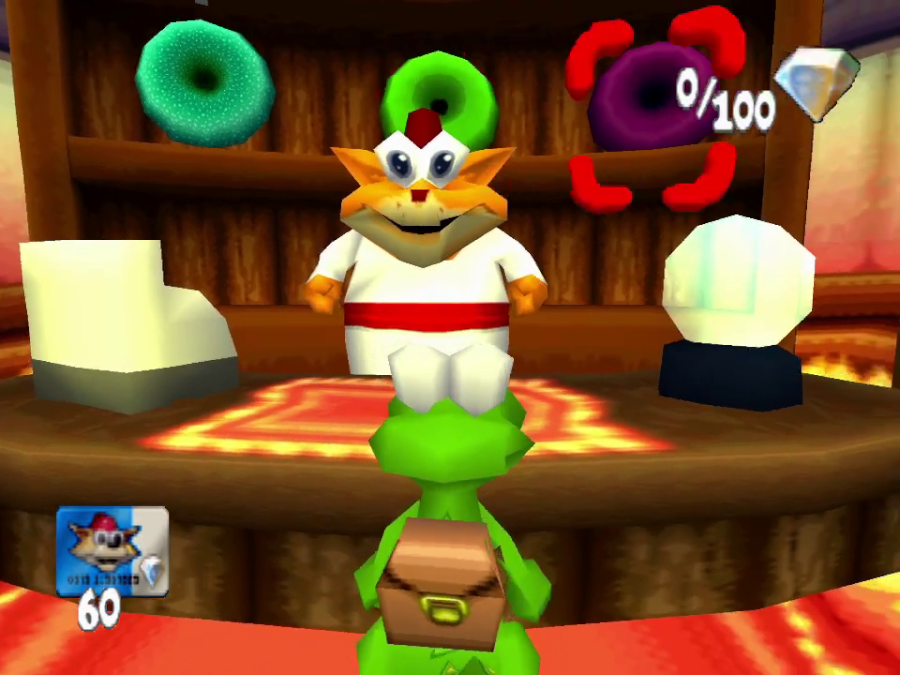
As said before, every hub has a shop where you can spent the accumulated clear gems for items and upgrades, but also some small sidequest that often require you finding items or visiting previous villages where other NPCs have or could now give you out more quest items, and the levels themselves have more varied objectives than just reaching the exit, like finding 5 chests, freeing a Gobbo from a cage by finding the key, putting out fires, chasing enemies, defusing bombs before timers run out, and they are generally more open and less segmented.
There is a decent variety of biomes-themes, as each village is themed after a civilization stereotype: sailors, cossack/vikings, cavemen, and while some elements are recurring (each world has a jungle or cave/mine stage), the level look more distinct and it feels less like the designer kept recycling and reskinning the same few assets, which contributes in making Croc 2 fix the issue of the original looking way to basic for a 1997 released 3D platformer, this one does look “like a real boy”.
For variety, there also mine cart-esque sections in cave or spelunking themed stages which control in a way that i will always associate with the mine carts levels in Crash Bandicoot: The Wrath Of Cortex, i might be missing some other ones that did it that way , but here you also have to lean to the sides to avoid broken parts of the track itself. Plus you also get a bit more use out of Croc’s ability to climbing some surfaces/walls (which was very sparsely used in the first game)
In terms of vehicle levels, though, i think Croc 2 might win the “nanny trophy”, as these are so laughably slow, made so overly-safe and accident-proof they almost feel like a joke, even the go kart race feel like they locked the engine to “fetus difficulty”, they’re not even bad, but stick out as super slow or super easy… mostly, there’s also other ones like the snow themed one where you have to control a big snowball, which once again remind me of Wrath Of Cortex’s sphere levels.
DIFFICULTY & LENGHT
While i’m glad the Sonic style health system is gone, as it didn’t really fit much the original Croc to begin with, since that game swung more towards Super Mario 64 and Crash Bandicoot…. i kinda wish they did, because not only you have no lives system, you start with 3 health points, and the health pickups are very scarce and the enemy never drop them, so the levels become way harder than they look because once you die, you can continue, but you respawn out of the level entrance in the hub, and you don’t get to keep the clear gems accumulated neither.
This isn’t necessarily a big issue in itself, at first, but since the levels are bigger and now often have non linear exploration or quotas to fulfill of rescued stuff or something, you get less chances to fuck up, meaning you’ll have to replay the levels multiple times because you need to learn and memorize them almost, to do it the “old fashioned way” in order to complete the level mission and exit out before your health and pretty much all progress done so far in the level is reset by a game over.
Again, since this time around level design copies a bit more from Spyro than Crash Bandicoot, one wonder why for Croc 2 they didn’t swap the Sonic style health system for Spyro’s or heck, or just copied the mask system from Crash, but they didn’t, and this design choice, as hip as it might have been for the marketing to crow about in press release, makes the game way harder than it should.
Especially considering it was still aimed at a young demographic.
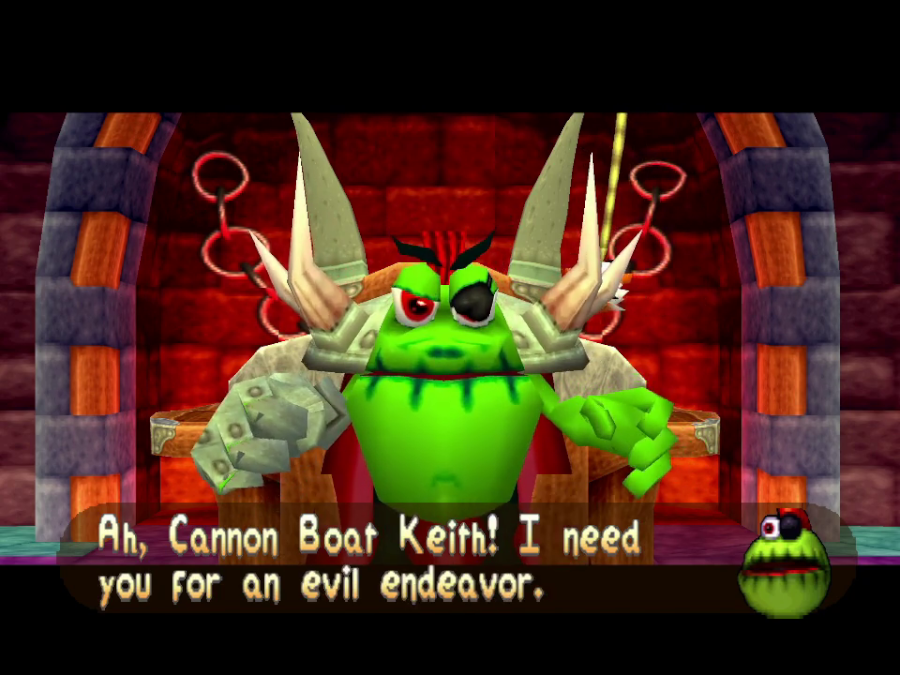
It almost feels like a last second overcorrection to reviews finding the first game a bit too easy at times, because otherwise it wouldn’t be this hard and punishing, it’s not even that frustrating in terms of actual level design… mostly, the previously mentioned mine cart sequences are kinda sadistic, and some of the late-game puzzles are a bit obtuse or made frustrating due the camera and some arbitrary choices to frustrate completitionists.
Still, it’s not THAT sadistic, the level aren’t that big to make the experience unbearable, Croc has post-hit invincibility frames, falling in lava more than twice in a row just respawn you out of the lava pit (same for falling in chasms), and at least you have a sort of wallet, meaning if you exit a level without dying, you’ll keep the clear gems you collected in it, so you can farm them (plus vehicle or boss levels generally net you 100 gems upon victory), and you kinda have to, since the shop offers health upgrades…..but you can’t upgrade your health point past 9, “it’s against the law”.
I assume they realized halfway how accidentally brutal the single decision of not having a lives system made the game, because the game eventually throws you a bone, so to speak: for example in the Cave Village a couple of levels have you retrieve 2 wheel items…. but these are stored as items in the inventory, so you can keep the ones you got before, you don’t have to recollect these from scratch, which does help, and sometimes you don’t even need to get to the “end” of the stage or use an Exit Gong to have the mission/quest counted as clear, you just need to get the collectables or fulfill the quota and exit out the level from its entrance.
Bosses are on the easy side but not absolute pushovers like in the first one, they have some actual design and proper tells this time around, and there’s some variety … even if mostly are dispatched by carrying and throwing something at them, some having some iffy hitboxes, but thankfully even these are nowhere of an issue as they were in the first game.
the two final bosses are pushovers, though, the goo man chu boss (nice pun) just requires you hitting a drain, and the final bout with Baron Dante feels like a joke, as in, it’s kinda inventive and not boring or bad, but it feels like it should have had at least 1 more phase where i get to fight Dante instead of letting Inventor Gobbo lay the “chaos emeralds” on the ground.
But then again the final village is strangely a bit shorter of regular levels, and speaking of which, as previously said the villlage hubs do have some simple fetch quests requiring you to collect items in these hubs, but otherwise they are just a more organic structure to divive the levels into than the old “overworld map”, though i wish they did have a checklist somewhere, instead of having to go up to a Gobbo NPC to see if the conversation you trigger has them thanking you or not to manually check if you already finished that level.
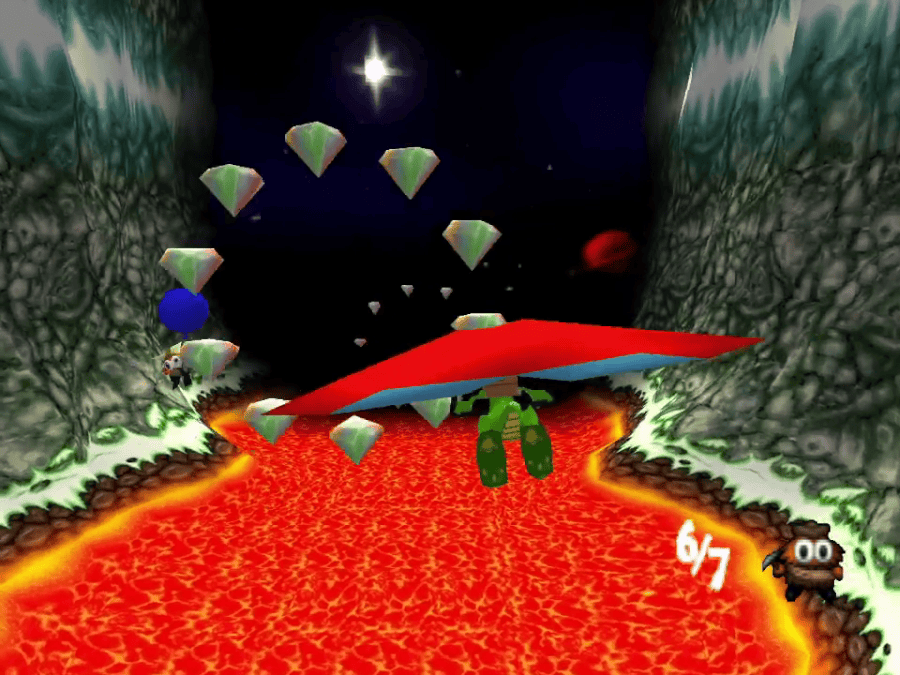
In terms of content, despite the level count more or less being the same, there’s more variety and bigger levels, just finishing the game and seeing the normal ending will take about 8 hours (twice than it took for the first one if i recall correctly), i assume almost double to complete it, i finished it and was just at a 54 % completition rate, as with Croc 1 you have a 5th secret world (and a secret ending) to unlock by grabbing the Golden Gobbos in each level (a reward for getting all colored gems in a level), playing the secret levels these unlock and then collect the puzzle pieces.
While there’s not much to say about options, as previously mentioned the autosaving feature is nice (and you can save manually too, no password system anymore thankfully), but the game also offers something called “Omniplay”, an unique 2 players feature that basically lets 2 people share control of Croc, with one player controlling the movement and the other the jumping, attacks and so on.
It does have purpose in helping younger players without “ripping” the controller out of their hands, it is a simple toggle in the Options menu, but i do wonder how much it was actually used, if at all.
OVERALL EVALUATION
Croc 1 was a bit clunky and basic, rough around the hedges and very derivative of other 3D platformers, but though some moxi and timing, basically became the best selling title ever for Argonaut Games, more than enough to warrant a sequel, so Croc 2 had some expectations to live up to (especially since in the US Fox Interactive did a huge cross marketing campaign with a candy company), and undeniably, it’s a notable, remarkable improvement from the first game, in terms of gameplay more than looks, but it’s bigger, better and more refined… mostly.
It’s still a bit clunky even for 1999, now feeling less of Super Mario 64 or Sonic mesh, more Crash Bandicoot with a Spyro-esque approach to level design and structures, and while it fixes some of the more pressing issues of the original, it introduces new ones and frankly because of those (mostly doing away of a lives systems entirely and giving the player little in terms of health pick ups) it becomes ironically way too hard and potentially frustrating for the young audience it was aimed at.
I do wonder how many did actually beat this one as kids, even with the curious Omniplay feature that let two people share/divide control over Croc and help out younger player.
It is more than just decent, but also not proper good, so it’s not hard to see why Croc 2 did end up selling “just” 500.000 copies (compared to the 3 milions of the first one) and received a mixed to positive reception back in the day, easily swallowed up in the sea of the fuckers, which also had iterated fast and improved across the board, on pretty much every platformer.
Since Croc 1 released in 1997, in just a few years the genre had exploded and prospered: heck just on PS1 the original Crash Trilogy had already wrapped up, Spyro’s was about to conclude just one year later, and even if you wanna ignore the Nintendo 64 catalogue (which i won’t) and remain in PS1/Saturn territories, we already had future classics like the original Klonoa, niche cult sensations like the Tombi/a! Games, bizarre stuff like the Oddworld games or the spin-off for The Neverhood that was Skullmonkeys, Rayman 2 was about to launch soon, etc.
Croc 2 was quite solid but even more “for babbies” than most of these, and frankly couldn’t compete with its main ispirations, nor exactly carve out its own specific twist on the genre to properly stand out, while still having some moxi of its own, somehow, so i do recommend checking it out when its remaster comes out later this year.
LEGACY
Croc 3 was actually planned, as a X-Box (original X-Box, i mean) exclusive, would have seen Croc train other bipedal crocodiles so they could take on their own adventures, and in this fashion would have seen two player and even 4 player co-op puzzle solving, ideally online.
but Argonaut Software was – never heard this one before – in financial distress, and after a string of various tie-in licensed games like Catwoman The Game (based on the movie from 2004) they unfortunately ended their career with Malice (a future Plaftormation Time Again subject), a game they were basically forced into cancelling, they did, and yet somehow ended up released in 2004 for PS2 and X-Box, with Argonaut as a whole going out of business just two months after the X-Box version of Malice released in European territories.
And so for two decades the company enjoyed oblivion, the great dustbin void of eternity.
As you do. And eventually, will.
But we already saw, the waves of nostalgia brought Croc to its island home to slay the Dantini feasting on his food and abusing his hospitality, and curiously didn’t even need Kickstarter, as the original founder of Argonaut Games, Jez San, in 2024 resurrected the company and bought back/reclaimed the rights to remaster the original Croc Legend Of The Gobbos, as there was a vocal community still fond of the old 1997 debut adventure of Croc, and in the summer of 2026 announced they would do the same for the sequel.
OTHER VERSIONS
Aside from a later PC version which released in 2000 (the Saturn manual of the first one teased the sequel as did the PS1 booklet, but the Saturn versione was cancelled, like the planned Dreamcast release) with improved graphics, better draw distance and some other fixes and changes, like for the first Croc, we did get an entirely different game by the same name on Game Boy Color, this time developed by Natsume Co (which became Natsume Atari and is NOT the same as Natsume Inc, the Harvest Moon guys).
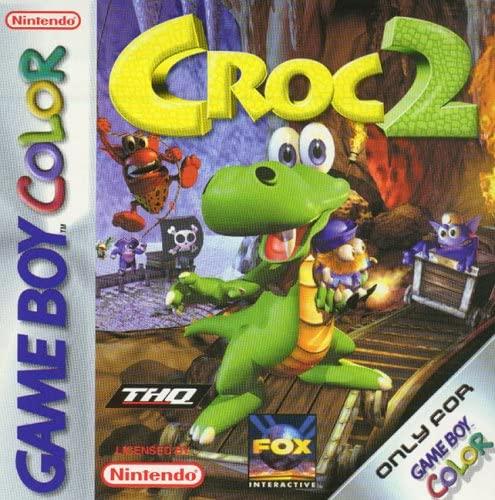
Still a 2D platformer, but not a sidescroller, actually more of a bird’s eye/top down prospective, so unlike Banjo Kazooie Grunty’s Revenge or the early GBA Spyro games, this choice works better, making a bit less confusing to deduce at which elevation are the various platforms.
To be honest it’s actually quite decent, for one it has actual lives, it gives you more health points immediatly and enemies actually leave health pick ups, controls well even in the ice levels, too, plus it’s not a demake; it does keep a lot of elements from the console release, but it has original level designs that often don’t even mirror too much or at all the console game, for example it has completely different puzzles and enviromental obstacles to move around, yet it has roughly the same plot and basic structure as the “real” Croc 2, more or less.
On the flipside, it does reuses its few puzzles ideas a lot, the levels keep the focus on exploration but there’s less variety in objectives, it is notably shorter, with 12 levels (including the 4 boss fights), even pulling a “Rayman 1” on the actual good ending, while also not offering a secret world with new levels. Plus it has no battery back for saves, though the passwords aren’t even that long.
Even so, it’s way better than the Game Boy Color version of Croc 1, this one is actually decent and fun to play, and it doesn’t cost much to get on the second hand market, yet, so it’s worth a play.

