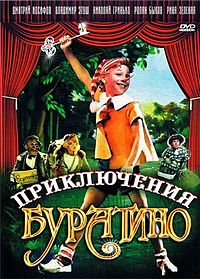
Pinocchi-O-Rama #9: The Adventures Of Buratino (1975)

For this month’s issue of Pinocchi-O-Rama, we’re going back to a “combo mix” of sorts.

We’ve seen live action adaptations, we’ve seen adaptations of the russian version of the novel, The Adventures Of Buratino/The Golden Key, we’ve seen musical adaptations.

So yeah, time to squish them all together for this 1975’s forgotten cult classic Soviet live action children musical TV movie adaptation of Buratino/Pinocchio shenanigans, made by Belarusfilm and released as a 2-parter, because media trends are cyclical after all.

Thankfully there’s no waiting for the climax as it’s almost a 50 yo adaptation, a fairly obscure one that thankfully can be found with hardcoded english subtitles on Youtube (fittingly spit in 2 parts, as well), and at the time of posting still is.

Continua a leggere “Pinocchi-O-Rama #9: The Adventures Of Buratino (1975)”

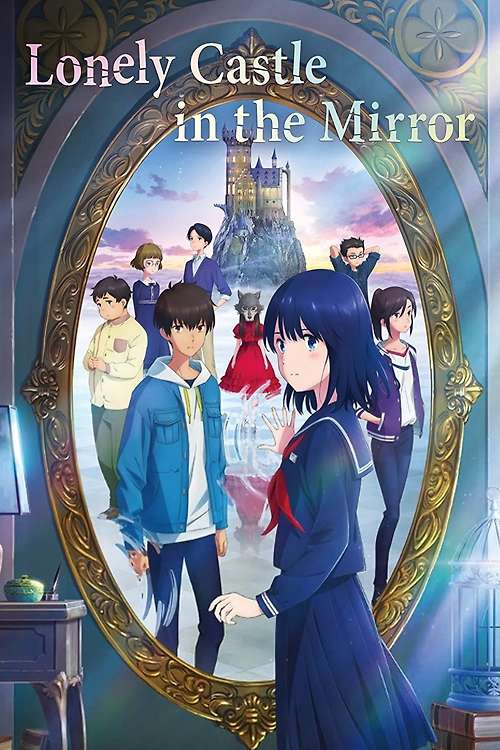
[EXPRESSO] Lonely Castle In The Mirror (2022) | Castle Club

The more recent movie from Keichii Hara (Colorful, Miss Hokusai, Summer Days With Coo, various Crayon Shin Chan movies), finally getting a limited theatherical release here.

The premise see a shy outcast girl, Kokoro, that one days sees the mirror in her room glow, only to be magically drawn into a fantasy castle, where other six teens like her where also invited. A mysterious girl in a wolf mask tells them that if they find the key hidden in the castle, one can get its greatest wish granted.

Though, anyone that breaks the rules of the castle will get eaten by a wolf.

Lonely Castle In The Mirror is what i would describe as an incredibly, slow, SLOW burner that hinges on the third act twist and the revelations it holds to make it all worthwhile, and actually DOES fixes issues you’ve might had, as initially less interesting or banal elements of the plot gain new meaning, and characters actually becoming complete as we learn their whole story and their role in the “grand scheme”.

Animation aside, which is fine but also kinda unremarkable, especially for a feature lenght.

Also, while the ending is fairly powerful and the third act elevates the movie, it doesn’t fix the fact you still have to sit though some mild teen anime school melodrama about characters that feel relatable but not really interesting, wondering why even have fantasy elements at all, and having to contend with what – initially- feels like a direction-less stroll.

Even with these flaws, the ending serves perfectly the exploration of themes such as teen isolation, bullying, escapism and trauma, makes all plot threads and character arc collide and complete, and does pack quite the emotional – and througly earned – punch.

Definitely worth a watch, at the very least.

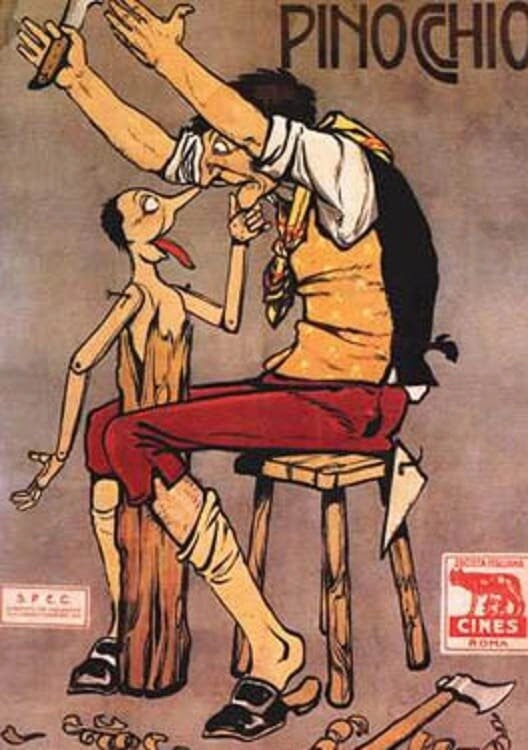
Pinocchi-O-Rama #8: Pinocchio AKA The Adventures Of Pinocchio (1911)

For the record, i absolutely detest how more than 60% (to be kind) of these Pinocchio adaptations are often called or retitled for international releases as “The Adventures Of Pinocchio”.

I get why, but still, at least opt for simply “Pinocchio”, makes it easier to search for even if we still have to put the decade after the title to avoid confusion, not that it would help too much because “Pinocchio (’11)” we’re talking about today was not made in “2011”, but the other “’11”, as in 1911.

We’re going back in time as hard as we can this time, since this is the very first movie adaptation of Collodi’s novel, an italian production as one could assume, and given its 112 years old, its no wonder it has been considered a lost film for decades, then in 1994 a negative was found, a 30-minute version resurfaced in 2022, and in 2018 we got a 50 minute version restored in 2K from the original negative with more footage taken from a positive nitrate copy and another negative (with different color tints), now both stored in a national Italian cinema archive.

Continua a leggere “Pinocchi-O-Rama #8: Pinocchio AKA The Adventures Of Pinocchio (1911)”

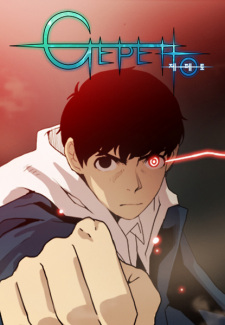
Pinocchi-O-Rama #7: Gepetto (Manwha)

If we’re talking about comics, we all known where Pinocchio comes to mind, though indirectly, as “The God Of Manga” Osamu Tezuka was inspired by Disney’s adaptation of Carlo Collodi’s book, and wanted to create a “reverse 21th Centhury Pinocchio”, a robotic boy already created to be as close as possible to perfection. I really don’t need to introduce Astro Boy, do i?

Tezuka would eventually do his own manga adaptation of Pinocchio, which would be interesting, but maybe too obvious, so we’re not reviewing that or Astro Boy.

Nope, we’re going for something far more recent, and pay visit to what i feel it’s an underestimated country in terms of comics, South Korea, that while it did get inspired by Japan’s anime/manga style and legacy, managed to create something distinct or similar but possessing its own personality and soul, dubbed as “manwha” for shorthand.

Though one could be forgiven to think that mostly it’s a matter of where its coming from instead of the content itself, given we had many distincly “manga” series come out from european or non-japanese artists (an easy example is Tony Valente’s Radiant), and the more successful/publicized often are aimed to the same age demographic as shonen mangas, or belong to popular genre trends.

But for each “God Of High School”, we have more unique work, like Hyung Min-woo’s western horror themed Priest, inspired by Monolith Productions FPS game BLOOD.

While a number of manwha series were and are given print editions in many countries (including Italy and France), the most common way to consume and access manwha in both its country of origin and international is “the internetz” and sites like Webtoon.

And indeed one can read the entire manwha we’re talking about today, Gepetto by Jewon Yeon, english translated on Webtoon, for free.

Continua a leggere “Pinocchi-O-Rama #7: Gepetto (Manwha)”

Pinocchi-O-Rama #6: √964 Pinocchio (1991)

Have i gone completely insane, spotlighting this one for a Pinocchio-inspired retrospective?

But then again we never talk about some good ol’ japanese cyberpunk body horror… and i guess today is no different because we’re talking about 964 Pinocchio.

Also called “Screams Of Blasphemy” for its UK release. Whatever.

And no, i still have no clue if the numbers in the title mean anything aside indicating that there were other 963 “pinocchio/sex slaves” manifactured before him, since he’s got that tattooed on his back, branded like an utility.

Honestly i wasn’t sure about including this one, but for variety’s sake, fuck it, i’m not reviewing Pinocchio In Space. Despite the obvious allure.

Continua a leggere “Pinocchi-O-Rama #6: √964 Pinocchio (1991)”

Pinocchi-O-Rama # 5: The Adventures Of Pinocchio AKA Un Burattino Di Nome Pinocchio (1972)

Don’t let the deceptive and common international title that’s often attached to many Pinocchio films, or the fact it came out in 1972, the same year as the popular italian TV miniseries of the same name (later edited as a compilation film) by acclaimed director Luigi Comencini.

This is actually a different adaptation, originally titled “Un Burattino Chiamato Pinocchio” ( lit. “ A Puppet Called Pinocchio”), that’s also the more recognized work of italian animator-director Giuliano Cenci, whom at the time was hailed as the “italian Walt Disney”, and he almost was if the distributors didn’t fuck him over, with a fuckin mess of indipendent regional releases that basically doomed financially the film.

It was so badly handled that at a time, in Florence, it was seen playing in a red-lights cinema called Arlecchino, which of course wasn’t where families went for a movie time with the kids.

To say nothing of how the movie managed to reach Egypt as an unauthorized bootleg they pilfered from the Italian Embassy. XD

Continua a leggere “Pinocchi-O-Rama # 5: The Adventures Of Pinocchio AKA Un Burattino Di Nome Pinocchio (1972)”

Pinocchi-O-Rama #4: The Golden Key (1939)

While reviewing Pinocchio: A True Story, we touched upon the fact Tolstoy created his own take on the story of Pinocchio when introducing it to russian children in 1936, calling it The Golden Key Or The Adventures of “Buratino” (taken from the italian “burattino”, a term lifted from the commedia dell’arte and that indicates a wooden doll/puppet), which also became an iconic piece of children literature during the Soviet Union and it’s still remembered in Russia to this day.

So of course there were film adaptations of the “Russian rejigged Pinocchio”, and today we’re taking to task the first one ever, done in 1939 by the legendary soviet director and stop-motion master animator Aleksndr Pthusko, which fellow “MSTies” might remember for his later fantasy epics and adaptations of popular russian (and finnish as well with the Kalevala based “Sampo”) fairytales, from The Stone Flower to Sadko (absurdly retitled The Magic Voyage Of Sinbad) and of course Ilya Muromets (there’s a Fate joke here, but i ain’t touching it).

Without forgetting the more well known film that often overshadows this one, The New Gulliver, released 4 years priors, which got Pthusko praised by fellow legend animator Ray Harryhausen.

Continua a leggere “Pinocchi-O-Rama #4: The Golden Key (1939)”

Pinocchi-O-Rama #3: Geppetto (2000)

Yes, we’re doing a Disney Pinocchio movie, but not the ones you might think of, since we’re travelling back to the dawn of the millennium for the kind of Pinocchio film that’s actually more common than you’d think: the musical. One of them, anyway, we’re doing some of the more intriguing ones later this year, today we spotlight a fairly forgotten made-for-tv musical starring Drew Carey and Julia Louis-Dreyfus, simply called “Geppetto” and released in 2000.

The idea – as exemplified by the title itself – is a nice variation on terms of how to retell the story of Pinocchio, because one could reasonably argue how odd that the narrative prioritizes following a character who’s personality basically was “pre-loaded” since “birth”, while leaving mostly in the background the only character that has past and would feasibly benefit from an arc.

At least, that’s what a superficial analysis might lead one to believe, but there is some truth to it regardless, because Geppetto is important to the narrative, and after all he’s the one who wanted so badly to be a father, albeit not in the way the story does.

Continua a leggere “Pinocchi-O-Rama #3: Geppetto (2000)”

Pinocchi-O-Rama #2: Pinocchio: A True Story (2021)

Let’s get the “meme boy” one over so we can kill any mystique it could possible accrue in time, by tackling one of the more recent adaptations, the Russian 2021 one that pretty much nobody would have cared about if the english dub had Paulie Shore delivery such a stock effeminate – and most importantly out of place – performance as the titular Pinocchio, especially notable in the clip you’ve seen of him talking to Gepetto of how he wants to see the world on its own, as he ready for it.

Tybald being Pinocchio’s horse, which he never had in the original story, but then again, it bound to be expected from your movie when it can’t even have the gall to call itself “THE true story”.

Just one of the many. Whatever.

I guess someone finally saw Tangled and wanted to have a funny horse character, so much it presents the movie as a story he’s telling you about, giving the basic gist of Pinocchio being carved by Geppetto, dissing the “growing nose” thing and then actually… preseting more than actually narrating the whole thing. Liar. And odd as a Jiminy Cricket replacement. Sort of. Not really.

Continua a leggere “Pinocchi-O-Rama #2: Pinocchio: A True Story (2021)”

Pinocchi-O-Rama #1: A Tree Of Palme/Palme No Ki (2002)

While it’s not completely unknown, i’d say A Tree Of Palme it’s quite obscure, definitely forgotten, overlooked and rarely discussed, despite being created, written and directed by respected anime veteran Takashi Nakamura, who also previously worked as a key animator for Nausicaa And The Valley Of The Wind, joined the acclaimed anime anthology of Robot Carnival in 1987, and just the next year would be animation director for a little movie called AKIRA.

It was also laboriosly made over the span of 6 years, and you can just tell by the cinematography that indeed A Tree Of Palme was treated as a big project that Nakamura wanted to cultivate as well as possible without compromises to his vision.

The story concerns the titular Palme, a puppet created by a man for his sickly wife, and upon her death the puppet becomes paralyzed by sorrow, until he accidentally stumbles upon a misterious woman (whom Palme mistakes for the man’s dead wife, Xian) being pursued, and she entrusts the puppet to deliver a certain special item to a sacred place called Tama.

Continua a leggere “Pinocchi-O-Rama #1: A Tree Of Palme/Palme No Ki (2002)”