[EXPRESSO] A New Dawn (2026) | Deidara Docet

Directed and written by Yoshitoshi Shinomiya, A New Dawn is an anime film about the creeping effect of gentrification, and how it effected an historical fireworks factory held by the Kaitewaki family for centuries, and in turn Keitaro and Sentaro, the two young sons, and their childhood friend Kaoru, which drifted apart after Keitaro’s father disappeared, leaving the property to rot, while government officials have waited to prey on it for “renovation”.

Sentaro and Kaoru left for the city, but some years after Sentaro drags Kaoru into talking Keitaro out of his reclusive stay on the old family home and factory, as the city is gonna tear it down in a matter of days, which brings the trio close as they once were, and provides them with an occasion to pull off the complex firework display concocted by the father (called “Shuhari”) but never put into action, something that involves a special pigment and pattern, as something of a farewell…

While there is a romantic subplot, A New Dawn is mostly a drama about confronting with the past, coming to terms with modernity but without giving up on craft, tradition and art just because it falls out of fashion, is outright rejected or simply becomes more and more obsolete by the new norms, and it’s a pretty dang good one, with great realistic teen characters, amazing melanchonic vibe, a really good artistic painting-inspired style, and while animation is already damn good, it’s commendable how it’s willing to experiment with stop motion animation sequences too.

Also, A New Dawn fittingly also feels like a light of hope for the anime industry maybe still able to have new talents (this is the directorial debut for Yoshitoshi Shinomiya, whom previously worked on Makoto Shinkai projects) emerge in spite of… well, of itself.

Recommended.

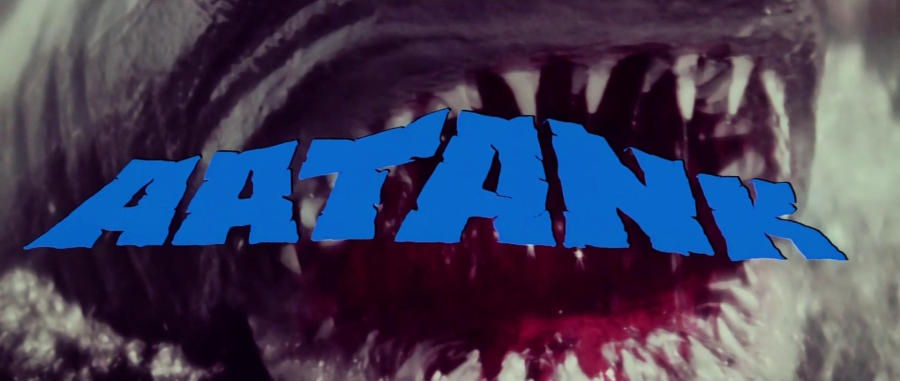
Aatank (1996) [REVIEW] | #thesharklist

Ah yes, foreign Jaws “rip-offs”, my favourite blend of shark trash.

I’m leaving the Turkish Çöl for another time, as we’re tackling one of the most featured ones in such lists (and prominent for obvious alphabetical reasons), the Indian Aatank, which itself had a troubled production history, being shot in the 1980s but not released until 1996, and being the last film appearance of a beloved Hindi actor (and politician), Dharmenda.

at least according to most sources, i can’t really corroborate from experience.

Though it’s worth being upfront in how this is another case where it being labelled a “Jaws rip-off” is mostly misleading, though kinda of a necessary evil to lure in people that wouldn’t have bothered at all if i didn’t say shit like “Bollywood Jaws”.

This is not to say that it’s random and unfitting, the movie has a killer shark in it…. but technically the same could be said of Back To The Future Part 2 due to the “Jaws 19” hologram.

Continua a leggere “Aatank (1996) [REVIEW] | #thesharklist”

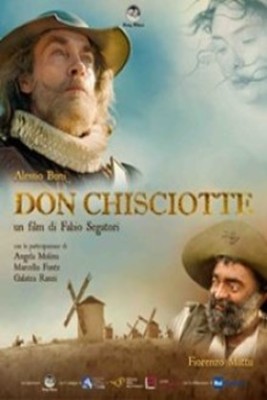
[EXPRESSO] Don Chisciotte (2026) | Romance Dusk

A new, Italian adaptation of the famous Don Quixote by Cervantes, also based off an old theathre adaptation of the same classic story by an often unsung master of italian cinema and theathre (among others thing, he co-wrote Bycicle Thieves) Gerardo Guerrieri.

While i’m not familiar with Guerrieri treatment-version of the story, i think this aspect it’s worth noting because some there’s a theathrical flair and approach to some scenes, for better or worse, not that i think this is a proper, major flaw.

That said, this is a straightforward adaptation of the classic novel, taking place in its proper time period and locations, but aside the beginning and end framing this as Cervantes himself envisioning his book while being treated at a hospital after partecipating in the Battle Of Lepanto (and a couple of events are cut to avoid the film go over the 2 hours runtime) it is indeed Don Quixote, and ironically the fact it’s not a modernized take gives it more impactful.

Sure, while i did like Gilliam’s take on the tale (for example), i also understand that in a way there’s no need to modernize the story, as it’s themes do keep on resonating as strong as they do today, and reconfirm this as a modern classic not just because they tell you it is and make you read it in school.

I won’t lie, at times its committment to being faithful makes it a bit too didactic, some of the acting isn’t amazing, but the main performances of Alessio Boni (Don Quixote) and Fiorenzo Mattu (Sancho) are great, photography is quite good, and the committment to have the world feel extra concrete extends to avoid any digital effects, as in, they actually built real windmills and windmill props, which is extra laudable especially now.

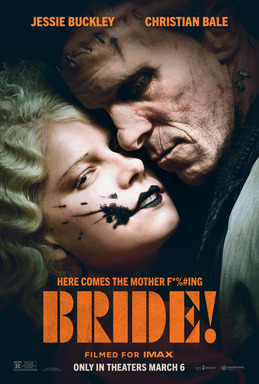
[EXPRESSO] The Bride! (2026) | Mary Shelley’s Frankenmess

This was a film i did look forward to see, obviously, being a peculiar take on Bride Of Frankenstein, with the trailers showing off The Creature (the Frankenstein monster) and The Bride in a Bonny & Clyde, Syd & Nancy style dynamic as they travel a 30’s America of gangsters and trenched detectives.

The premise sees the ghost/spirit of Mary Shelley, the author of Frankenstein herself, meta narrate about her “sequel” about the “Bride” of Frankenstein, in this case the corpse of a prostitute working undercover to gather info about a particularly violent mob boss, which is dug up after the Creature travels to America and seeks the help of Dr. Ephronious to make him a companion in order to soothe his unique loneliness.

The experiment is successful and so the Bride is borne, but it becomes difficult for the two monsters to go unnoticed, not only due to the police and the mob befuddled by a presumed dead woman showing up on the newspapers’ headlines, but also because Mary Shelley herself occasionally possesses the Bride’s body…..

the idea of a feminist take on Bride Of Frankenstein makes perfect sense, i do believe so, even if discordant by design, as it’s not only a horror-crime duet of deranged protagonists complementing each other’s delirium, but it’s also a gothic romance that often dips into comedy and even musical sequence that seems to tribute-spoof Frankenstein Junior.

It’s ambitious and – again- by design tries to combine together pieces that don’t really naturally fit, which is indeed “very Frankenstein”, but the execution honestly feels like a really hot mess of intentions, even more stitched together and messier than intended, downright clunky.

I do respect its ambition, even if the final result is indeed quite flawed, but also proper interesting and never quite boring.

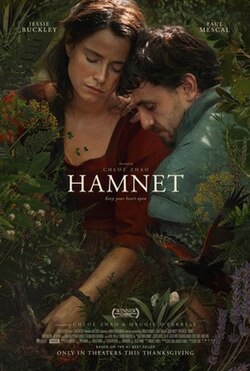
[EXPRESSO] Hamnet (2025) | The House That Will Built

Chloe Zhao (Nomadland, Eternals) is back for an adaptation of Maggie O’ Farrell book of the same name, a semi-fictionalized retelling of the lives of William Shakespeare and his wife Agnes.

Agnes is a peculiar woman for 16th centhury Stratford: she is skilled with herbs, animals and ointments, she often walks alone in the forest, which makes the town gossip of her as a “witch”. One day she is noticed by Will, a man teaching latin to sons to repay the family’s debt, who falls in love with her, is reciprocated, and despite Will’s family being against it, the two marry, and have three sons: Susanna, Judith, and a boy, Hamnet (which we’re told by text in the prologue was equivalent of “Hamlet” in that day).

Though fate has it in for the young Hamnet, which contracts the plague and dies, further straining the relationship between Agnes and William, the latter which is often away to pursue his budding theathrical career in London…

I think there’s some irony in how the more this tries to work in the famous Shakespeare lines and have this whole familial tragedy serving as what would inspire William Shakespeare to write Hamlet… the more it feels oddly “forced”, almost using the idea as a crutch.

This in a movie where William Shakespeare isn’t actually the protagonist, which is fine, since this IS Agnes’ story by far and large, i get that, but it’s also undeniably way stronger when it’s just being this familial period drama about the loss of a son to illness with some touches of a pastoral magic reality, incarnated by Agnes herself, the “forest witch”.

It just makes the final act a bit wobbly (almost clumsy in how direct it is), but still amounts to Hamnet being a very good film, nonetheless.

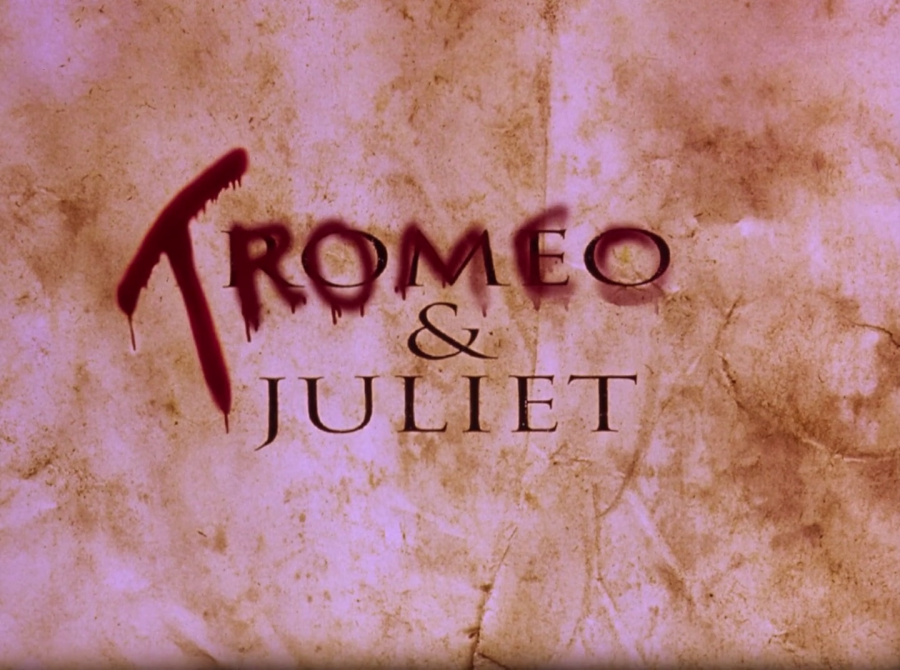
Tromeo & Juliet (1996) [REVIEW] | Troma Shaped Box

While i was adamant about never reviewing a Troma film again due to them defending Harry Knownles some time ago, after seeing the new Toxic Avenger reboot/remake i realized there’s no point as the company died years ago, the soul of it, anyway, and it’s sad that i somehow longed for when they were trash but punk for real, instead of pretending as they are today.

Plus, at this point, they have so little relevance left regardless, so whatever, as they have a right to keep trying to remake their old shlock classics (or do new installments on their old series like Class Of Nuke ‘Em High), so have i to review Tromeo & Juliet for a lark if i want (and so have you on this decision of mine, obviously), and because it’s that time of the year .

I was gonna say basically the same thing for the SGT Kabukiman review i planned last year, but that i had to delay, so i’ll refer back to this one for clarification in the future, instead of redoing the spiel everytime.

And i guess at one point i’ll have to do a full essay on Kaufman and Troma as a whole, because in a way it deserves more discussion that i’m giving it here, but let’s not get carried away, it’s time to revisit a Troma classic, their shlock loose retelling of Romeo and Juliet, with an obvious but also obviously catchy punny name, Tromeo & Juliet (still makes more sense than Gnomeo & Juliet).

Time to shit on Shakespeare, because why not?

Continua a leggere “Tromeo & Juliet (1996) [REVIEW] | Troma Shaped Box”

Big Top Pee Wee (1988) [REVIEW] | Romancing The Weiner Tree

Need to preface this one by saying that the title might not imply what you think.

As in, newer generations (especially not from the US) most likely don’t know that “Pee Wee” isn’t slang for something (and i hope it never was), it’s just a comedy character played by late American comedian Paul Rubens, which developed the character of Pee-wee Herman with Phil Hartman (of Simpson fame), originally debutting for a sketch, then getting its own weird “kids comedy show” called “Pee Wee’s Playhouse”, and success eventually brought the Pee Wee persona to the big screen, with Pee Wee’s Big Adventure (1985) also being the first feature lenght film directed by Tim Burton, with also Danny Elfman debuting here as a composer.

I didn’t grow up with the old show as i’m not american and “too young for that shit” at the time, but with the Burton film arriving here too i remember vaguely Rubens face, but regardless, the film launched Burton’s (and Elfman’s) whole career and is still fondly remembered.

I rewatched this very recently, like two weeks ago, and i can say it still holds up, a surreal cartoony live action ride brimming with irony and zany humour under its own mask of false naivetè.

Given, you have to understand what “Pee Wee Herman” is, and basically he’s a flamboyant manchild that dresses up like a golden age ventriloquist dummy, moves like one too, has a weird laugh, a child-like impatience and “lust for fun”, always surroding himself with some weird contraptions, and basically following his quirky autisms where they take him, be it a fixation on bycicles or something else.

So indeed, an idiot sauvant for the ages, even though i’m not sure how much well modern audiences would take to his character, as he may come off ironically pervish, which is almost funny in hindsight, thought the character isn’t that, and is more on an outcast living in his own world, hence perfect for Burton’s debut, he build a career on this sort of weirdos, after all.

But we’re not here to talk about his Big Adventure.

We are here to remember they tried making him a film series, following up in 1988 with Big Top Pee Wee, which has been mostly forgotten at best by audiences.

I never saw it before and honestly didn’t even know it existed until i accidentally stumbled upon it while searching for films about the circus.

Continua a leggere “Big Top Pee Wee (1988) [REVIEW] | Romancing The Weiner Tree”

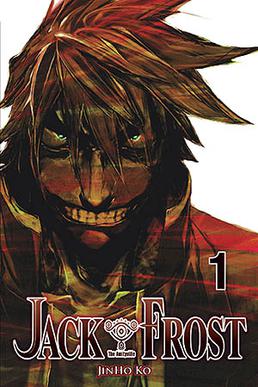
Jack Frost: The Amytiville [MANWHA REVIEW] | The Teen Hellsing Years

This has been on my bucketlist for a while because it was such a transparent case to me.


As in, sometimes you have comics more or less explicit in showing their inspiration, their model to copy and emulate, happens a lot in shonen manga but it’s not always what one would assume

Sometimes it can be just a conflation of this kind of comics being very iterative and built (like most books and movies, for that matter) on clichès, on proven formats, time-tested formula, so similarities are often more coincidence than deliberate emulation of a specific series among the sea of many similar ones, expecially when in turn they influence each other as they go, and in time are themselves taken as examplse to follow.

But once i laid eyes on this manwha (a “korean manga”) by Ko Jin-Ho, Jack Frost: The Amityville, aimed at basically the same demographic of an edgy Shonen Jump series, then red the first volume, i was kinda happy in how immediatly obvious it was to me what this wanted to be.

As in, a more shonen take on Hellsing, the renowed pulp classic by Kohta Hirano about vampires, guns bigger than people, religious freaks with knives that double as lances and undead nazi cyborg monsters.

Continua a leggere “Jack Frost: The Amytiville [MANWHA REVIEW] | The Teen Hellsing Years”

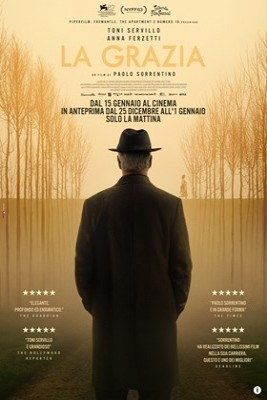
[EXPRESSO] La Grazia (2025) | Servillo: Doomsday

I will preface this review by saying that while i did see The Hand Of God back in 2021 and quite liked it, i somehow missed Parthenope entirely and never corrected that.

La Grazia (meaning both “the pardon” and “the grace” in italian) though is definitely getting marketed proper, and it just released in theathers here some days ago.

It’s definitely easy to see why this one was pushed, as Sorrentino summons back again veteran actor-muse Toni Servillo.

Here he plays Mariano De Santis, a fictional Italian president whose popular and respected political run as president is about to naturally run its course, and while he looks backs on his career, he’s pressured into taking a stance about making euthanasy legal, and if to give pardon (or not) to two thorny homicide cases.

Not easy, especially when he became known for his undecisive nature as a stickler juror (that earned him the nickname “reinforced concrete”), and while his political run is about to conclude, this doesn’t give him any peace, even more as he misses his deceased wife and is obssessed by how she once cheated on him, and still, 40 years after, he doesn’t know with whom.

yes, this indeed sound and IS a Paolo Sorrentino film, in all the ways you’d expect by now.

though i’d say it feels different enough to stand out, as it dabbles more on realistic grounds (while still having the surreal tone his films often sport), and plays more like a “chamber drama”, more intimate in nature and locations, familiar but not too much, dealing with a still relevant theme.

It’s not a perfect “return to form”, since the script at the end opts for a questionable choice, while also misusing a potentially great side-character, but even with these flaws, i’d recommend it.

Final Verdict: Expresso

[EXPRESSO] Dracula: A Love Tale (2025) | Gothic Hark

Talk about a left field proposal from Luc Besson, a director better known for sci-fi films (among other things), doing a Dracula adaptation in the traditional period piece setting, and making it focus on the gothic romance aspect.

Especially since we weren’t exactly that starved, with Egger’s Nosferatu and Last Voyage Of The Demeter, among others moving based on the Bram Stoker’s novel as a whole or specific parts.

Not much to say about the plot, it’s Dracula, as in, the expected plot for a Dracula adaptation, hitting most of the expected scenes and having the expected characters from the novel, and even some of quirks of previous films incarnations, like Dracula greeting Harker with that ridiculous hairdo he has in Coppola’s version, with some differences to accomodate this take on the story.

It’s well acted, the production values are high,… but it’s also all over the fuckin place.

Yes, the idea is that it focuses a lot more on being a gothic romance film, which is clearly the focus, and that does work… when the tone doesn’t shift drastically from a semi-quirky lore talk about Van Helsing explaining how to tell if a person is a vampire, the pacing grinds to a halt so Dracula can flashback even more, or jest around with Harker almost like we are in a spoof film.

Or have multiple, elaborated swordfights-war battle scenes.

It’s almost like at times Besson remember there’s the usual Dracula subplots to move along and then zoom, then why not, let’s take a break to have a romantic stroll through festival activities, i’m sure the pacing can take it.

To say nothing of the kinda expected conclusion that still feels like an anti-climax.

I’m not even mad, just a bit confused, but i will say it’s anything BUT boring.